Paddy Moriarty’s Rock
About a mile below our farm, the Madawaska River turns
sharply to the right as it meanders on its south-east journey towards Arnprior
and the Ottawa River. Strangers
coming down the river, canoeists and fishermen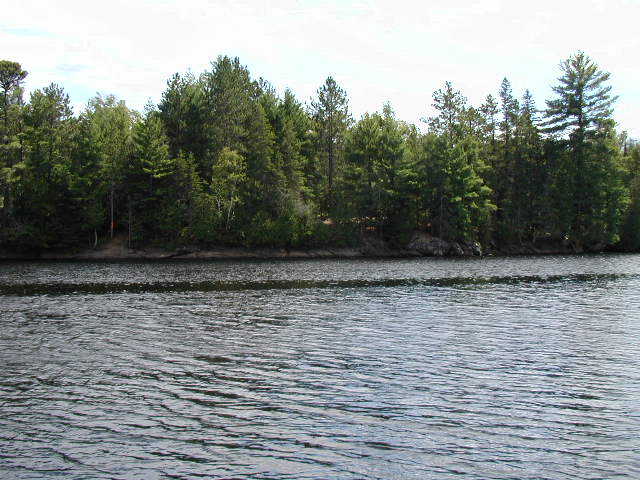 from other parts, are just as
likely to miss the turn and head straight into Aumonds Bay and towards the
hogsback directly in front of them. Finding no way out, they eventually exit the Bay and
paddle right past the twelve-foot wall of Canadian Shield rock, known as Paddy
Moriarty’s Rock, on the east side of the river.
Stories abound with some connection to the rock.
from other parts, are just as
likely to miss the turn and head straight into Aumonds Bay and towards the
hogsback directly in front of them. Finding no way out, they eventually exit the Bay and
paddle right past the twelve-foot wall of Canadian Shield rock, known as Paddy
Moriarty’s Rock, on the east side of the river.
Stories abound with some connection to the rock.
It’s supposed to be a great fishing hole but you have to
watch so that you don’t hook on to an old Ford car.
The sheer cliff drops another twenty feet to the river bottom and the
microscopic plant and organic life of the river sweep widely around the bend,
brushing up against the rock and making a likely moving buffet for any fish that
wishes to laze in the deeps and feed away.
The strong undercurrents keep the water from freezing most of the winter
and in those years when the cold is particularly severe, this will be one of the
last places to freeze over and the first to open in the spring.
For that reason, as the story goes, some lads from the area dragged an
old Ford down there one winter and took bets on the date it would fall through
the ice with the spring breakup. I’ve
fished there several times and caught neither fish nor Ford.
Only a few boat lengths to the north of the rock the
currents and movements of the river waters slow as they merge into Aumonds Bay.
Finally, the flow becomes virtually nonexistent and a lake-like body is
formed. As a child I recall there was no lack of ice on the Bay.
We fished through ice holes in the winter months and skated on partially
cleared rinks while empty logging trucks used the ice as a short cut on their
way back for another 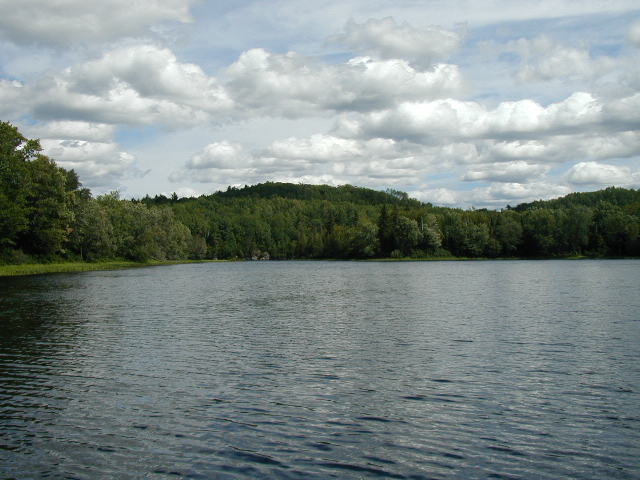 load. Our
parents warned us though, to stay in on the bay, and no matter what the
temptation, a wandering hockey puck or family dog, “Stay off the river,
especially over there by those rocks!” The
message stuck because just last year, while a group of us were ice fishing on
the Bay, Rich, a friend of Mike’s from Toronto, got on a snow machine to go
for a ride. He started heading out of the Bay while we all shouted after
him trying in vain to raise our warnings over the roar of the machine and
through the helmet. To the relief
of all, he made a U-turn before reaching danger and headed back towards us
wondering what the heck we were all doing lined up angrily staring at him.
load. Our
parents warned us though, to stay in on the bay, and no matter what the
temptation, a wandering hockey puck or family dog, “Stay off the river,
especially over there by those rocks!” The
message stuck because just last year, while a group of us were ice fishing on
the Bay, Rich, a friend of Mike’s from Toronto, got on a snow machine to go
for a ride. He started heading out of the Bay while we all shouted after
him trying in vain to raise our warnings over the roar of the machine and
through the helmet. To the relief
of all, he made a U-turn before reaching danger and headed back towards us
wondering what the heck we were all doing lined up angrily staring at him.
In another story, my eldest brother Don, who was by this
time a grown up, with grandchildren, for Heaven’s sake, was laughingly telling
about the proof of the severity of a particular winter and how he had been able
to travel on the ice from the rapids two miles below.
“We came up the river on the snowmobiles, all the way from the
Snake,” he boasted, “right past Moriarty’s Rock.”
My mother, well into her eighties, turned on him with narrowed eyes.
“You’ve been told a thousand times to stay away from that rock! If you’re not careful, you’ll end up like poor Paddy,
himself!”
We all knew there was a tragic story connected with a
fellow named Paddy Moriarty so, one evening, with pen and tape recorder in hand,
I went to get the whole story from my mom.
After a series of questions I gathered from her that it
was around the turn of the century in the heyday of log driving down the river.
The local people would cut pulp and logs in the winter months and haul it
out on to the ice. People marked
their logs for ownership and cullers from the lumber company would come by and
cull, or remove any logs or pieces of pulp that were unfit for company use. Before the spring break up, the owners would come back and
gather up the culled material for their own use; probably as firewood.
Families who lived on the hills behind Aumonds Bay, the Cuddy’s,
Moriarty’s and O’Briens, would bring their logs and pulp down and pile them
up on the bay, out far enough so that the river current would catch all of it in
the spring and, with the help of the log drivers, carry it to the mills nearly
one hundred miles southeastward to where the Madawaska joins the Ottawa River.
On one of the weekdays the cullers had come down the road
and went on the river at Madigan’s farm and travelled down the river, by horse
and sleigh, to the bay. Then, on
Sunday evening Paddy came down to the bay from his place on the hills.
The Moriarty’s said later that they guessed the warm spring sun had
melted around the horses tracks from the cullers making them look fresh, perhaps
only a day old. It seemed that
Paddy figured if the horses had just been out there the ice would still be safe
so he walked right out to the log pile.
Mom hesitated here, looking across the darkening room as
if calling up some other distant story. “Dad used to say you can never trust that spring ice,”
she said. “In the fall it will
crack and crack and bend and give you lots of warning that it’s going to go.
But, in the spring it turns all slushy-like and, at night it freezes
together a bit, and you’ll be walking along and, suddenly, Kerplunko, in you
go. That must have been what
happened to poor Paddy.
“The Moriarty’s said he left his cap on the ice so
they’d know he’d fallen in and couldn’t get out.
You know, Willie John did that too when he fell in.
Now whether John’s cap fell off by accident or whether he consciously
hung it there on the tree branch, it’s hard to say.
However, when Paddy didn’t come back home on Sunday evening Mrs.
Moriarty went over to get Uncle Tom O'Brien to help her go down and look.
They went with the lantern and saw how his tracks went out on the ice. It
was too dangerous to go out there in the dark looking for him with only the dim
light of the lantern. After calling and shouting well into the night they
had to head back home and come back with the help of some neighbours in the
morning. They made their way along the shoreline to the rocks and from
there they could see his cap out on the ice. Uncle Tom said it was a quiet and solemn
moment as they stared out at the cap in silence while the realization sunk in.
“There wasn’t any way to look for him in those days.
The river was breaking up but it was still frozen in a lot of places so
even a few men couldn’t do much in a boat.
There were no motors, of course. The
farmers along the river often had animals drown though, and they knew the
carcasses always showed up in the spring. Most
often the log drivers would find them. The
poor Moriarty’s didn’t have much choice but to wait ‘til spring breakup
when the log driving would start. It
must have been an awful wait for them. However,
the old Irish believed that if you blessed a loaf of bread and put it in with
the right intention, it would go right down to where the body was.
So, they had Father Frank French bless a loaf of bread and they put it in
where Paddy had gone in and waited. The
old people had great faith like that.
“Jim O’Brien and Bridget weren’t married yet in
those days, in fact most didn't even know they were dating. The news of
their trip exposed their romance and Jim often had a good laugh about it in
later years. Jim loved to fish and it was later in the spring that they went down the river.”
I
interrupt her here to make sure I’m imagining the right Jim.
There were several O’Brien families in the area as I was growing up
and, of course, there was more than one Jim.
“Was this Jim on the hill”? I asked.
“Yes. Yes. Uncle Jim.
The one Bridget married.”
I remember his happy, smiling face.
He seemed such a contented man. On
Sundays, in church, he sat behind us and he’d ask me in a loud whisper that
could be heard several pews away, “How’s the fishin’?”
Now, even today I love to fish and I know a lot more about how to catch
one than I did then. Since we
didn’t have a motor for the boat, wherever one decided the fishing hole was,
you had to ride your bike to fish off the shore or row the boat to it.
My brother and I usually chose the great hole in the shade of the cedar
tree across the river where we hauled in rock bass and sunfish.
Only once, when I was trolling behind the boat with the old thick green
line and a white plug, do I recall catching a sizeable pike and it frightened
me. Nonetheless, I’d respond to
Uncle Jim’s mischievous smile, holding my hands in a parallel position a
couple of feet apart indicating a longer fish this one week or a shorter one the
next depending on how I felt my own ‘story’ should go.
He’d laugh with a whistling, hissing release of air like a person with
bronchitis. On my parents twenty-fifth anniversary he came down the other
side of the river and I went with the boat to bring him over for a visit.
He played a few tunes on the fiddle that day.
“It could very well have been July,” Mom said,
“because Bridget was a teacher and I doubt if they would have been down the
river before the end of the school year. In
any case, they came upon the loaf of bread. They got looking along there and found the body just a little
further on.
“There was a story going around years after that Jim and
Bridget loaded the body into the boat and brought it back with them to the
Madigans but that was nonsense. The
body would have been in bad shape by then. The next day, Jack Madigan and a group of men went down in a
boat and brought the body up. By
the time they got back it was dark so they left it out on the verandah for the
night. Grandma was pregnant with
Leo at that time and, people long ago were afraid of a corpse.
Her bedroom was just inside. She
said it was an awful feeling trying to sleep right there with only a wall
between her and Paddy’s corpse.”
Mom explained that there was no church in Latchford Bridge
at that time but they had set out an area for the graveyard.
“They would have held a service at one of the homes nearby.
He’s buried somewhere there in the graveyard at home.”
She was certain she had seen a grave marker with his name on it.
Last summer I went fishing down on the Madawaska.
The Ministry has built campsites for the canoeists at several ideal sites
from Aumonds Bay to Griffith. There
is one built right at Paddy’s Rock and a group of young people were hooting
and hollering as they cannonballed each other from the cliff above the water.
Later that evening we could hear them from the farm as they continued to
party into the night. It was a happy contrast, indeed, to the dark story that
started there almost one hundred years ago.
Ó
Short Stories by Jack Madigan
Back to story directory