The Madawaska River
It meanders through what has been called
one of Canada’s top ten rural areas for country living and it is listed as one
of North America’s premier canoe routes.
For those seeking solitude, adventure, or simply an experience of nature,
it offers a wilderness haven. For
centuries it has been the lifeblood for the region’s rich vegetation, aquatic
and marshland life, and for the persons along its shores, whether the peoples of
Canada’s First Nation or the early settlers who came to carve out a living.
They call it the Madawaska River and it
runs through the valley of its namesake. Actually,
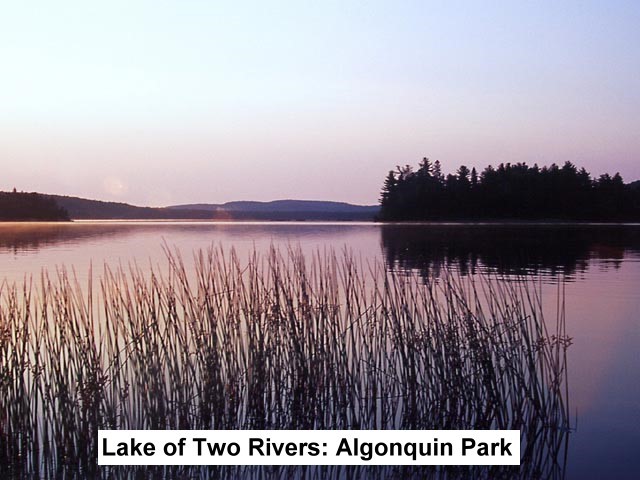 there are more hills than valley – the locals call them mountains – and
together with mighty oaks, sugar maples, birches, pines, spruce, and balsam fir
they frame the beauty of the river. It’s
on the southern edge of the great Canadian Shield, a geological formation of
very old granite and gneiss covering almost one half of Canada.
When the last ice age melted back some 11,000 years ago, it left a jumbled
drainage pattern of lakes, rivers, and streams that carried away the glacial
melt waters. From its meagre
beginnings in Algonquin Park, the Madawaska quickly builds into a series of
beautiful lakes and estuaries as it rambles in an east-south-easterly direction
towards the majestic Ottawa at Arnprior.
there are more hills than valley – the locals call them mountains – and
together with mighty oaks, sugar maples, birches, pines, spruce, and balsam fir
they frame the beauty of the river. It’s
on the southern edge of the great Canadian Shield, a geological formation of
very old granite and gneiss covering almost one half of Canada.
When the last ice age melted back some 11,000 years ago, it left a jumbled
drainage pattern of lakes, rivers, and streams that carried away the glacial
melt waters. From its meagre
beginnings in Algonquin Park, the Madawaska quickly builds into a series of
beautiful lakes and estuaries as it rambles in an east-south-easterly direction
towards the majestic Ottawa at Arnprior.
The river has been the constant, almost
unchanging element of the region, rising in the springtime, subsiding in the
summer months, freezing in winter, and always sending the soft roar of whitewater,
like the wind in the pines, riding the gentle morning breezes.
It is the embodiment of a wide range of emotions; serenity and
peacefulness, depth and shallowness, security and danger.
For the people living along the shorelines of the lakes and river it is
so much a part of their lives that each holds a treasure of stories that seem to
have risen from the waters. Around
supper tables and woodstoves, from the front seat of the car, or while dozing on
the bedtime pillow, the stories and memories are passed to the next generation. Tales of thunderstorms and snowstorms, fishing and canoe
trips, whitewater adventures, boats that went down, drownings, log drives, and of
the men and women at the centre of such stories who whittled out a livelihood
and created what has become the history of the region.
Some of my earliest memories are of
learning to swim in the river while the whole family went for a dip to cool off
after a hot summer’s day. Swimming,
rowing boats, skating in winter, or wading in swift water have no more of a
starting point in my memory than that of learning to walk or talk.
They all seem to have occurred as natural developmental processes at a
very young age. At the landing at
our farm we had wooden fishing boats that my father rented to tourists, and,
early on, we learned all about their floating and buoyancy properties.
On a summer’s day my brother Bryan and I stood in one that was filled
with water and barely submerged. We
were thoroughly convinced we had tricked the neighbour, on the other side of the
river, into believing we had mastered the ability to walk on water.
 Likewise, the sense of such dangers as
that of thin ice, or of boating or swimming alone, must have been embedded in
the stories and childhood experiences; I recall no specific lectures or
warnings. I have a clear
recollection, for example, of walking on the spring ice of Kennelly's Lake while checking
the trap line with my dad. He
chopped a slender pole, about ten feet in length, pointed the one end and used
it to test the ice before leaping across a narrow, open section along the
shoreline. He explained that it
would be safer to walk a few feet out from the shore because the ice would be
thicker where the heat of the spring sun was not melting it as quickly. It was clear from his explanation that this was true only of
still lake water, not of flowing creeks or rivers. The pole was used to jab at any questionable spots and then
he carried it along in a horizontal position so that if he did fall through, the
pole would catch on the ice.
Likewise, the sense of such dangers as
that of thin ice, or of boating or swimming alone, must have been embedded in
the stories and childhood experiences; I recall no specific lectures or
warnings. I have a clear
recollection, for example, of walking on the spring ice of Kennelly's Lake while checking
the trap line with my dad. He
chopped a slender pole, about ten feet in length, pointed the one end and used
it to test the ice before leaping across a narrow, open section along the
shoreline. He explained that it
would be safer to walk a few feet out from the shore because the ice would be
thicker where the heat of the spring sun was not melting it as quickly. It was clear from his explanation that this was true only of
still lake water, not of flowing creeks or rivers. The pole was used to jab at any questionable spots and then
he carried it along in a horizontal position so that if he did fall through, the
pole would catch on the ice.
Another memory and lesson was the day
one of my older brothers tumbled down the steep riverbank up near the gate, at
the cottage. It was an early spring
day and a number of us, my brothers and sisters, were playing along there.
He suddenly lost his footing and tumbled with a splash into the ice-cold
river below. He quickly grabbed an
overhanging branch, heaved himself out, and scrambled back up the embankment.
Without a word, he took off for the house, running.
“Where is he going?” I asked of one
of the older ones.
“You get a freezing like that, you get
into a warm house as fast as you can,” he explained.
No further lectures or warnings were
necessary about the dangers of playing along the riverbank or of avoiding a
spill into the icy river.
And there were plenty of opportunities
to fall into the “drink.” Earning
some spending money was a challenge  for youngsters on a farm three miles in from
the nearest highway. In the spring
months, for approximately six weeks, we trapped muskrats along the river.
A good pelt would bring 75 cents so we began trapping even before we
reached our teen years. It took some time to learn the art. I’d be out before sunrise every morning to check the few I
had set. After several early
risings and no luck, the novelty would wear off and I’d seek advice. I learned from my older brother to chop a notch in the log so
that the trap was virtually even with the level of the log.
Also, it was important to cut the notch to a tight fit.
The tighter the fit, the more likely one would trick the rat.
Occasionally my dad, or one of the older brothers who had really mastered
the art of camouflage, would catch a mink, a golden mother lode. That was the
Irish Sweepstake for me to dream about. Trapping
on the river is where I learned to keep both feet in the boat or else get out of
the boat and get both feet on the log; one of either two.
If one tries to straddle the two, the boat will move and you’ll end up
in the water. That image has served me well over the years as a metaphor in
dealing with organizational change. You
can’t straddle the old way and the new. You
have to get over completely to the new way of doing things.
If you try to keep a foot in
for youngsters on a farm three miles in from
the nearest highway. In the spring
months, for approximately six weeks, we trapped muskrats along the river.
A good pelt would bring 75 cents so we began trapping even before we
reached our teen years. It took some time to learn the art. I’d be out before sunrise every morning to check the few I
had set. After several early
risings and no luck, the novelty would wear off and I’d seek advice. I learned from my older brother to chop a notch in the log so
that the trap was virtually even with the level of the log.
Also, it was important to cut the notch to a tight fit.
The tighter the fit, the more likely one would trick the rat.
Occasionally my dad, or one of the older brothers who had really mastered
the art of camouflage, would catch a mink, a golden mother lode. That was the
Irish Sweepstake for me to dream about. Trapping
on the river is where I learned to keep both feet in the boat or else get out of
the boat and get both feet on the log; one of either two.
If one tries to straddle the two, the boat will move and you’ll end up
in the water. That image has served me well over the years as a metaphor in
dealing with organizational change. You
can’t straddle the old way and the new. You
have to get over completely to the new way of doing things.
If you try to keep a foot in  both camps, you’ll end up in the drink.
Dangers associated with the frozen river
were constant. Farm animals had to
be watched and discouraged from the ice. We
once lost a bull that was crossing on the ice to visit the neighbour’s cows. -
Mother used this as a lesson on “pure thoughts”.
Yet, the old folks seemed to know the limits and used the ice to their
advantage. Farmers and loggers built ice roads to gain shortened access
to their winter jobs. Grandpa
Helferty regularly built one to cross over to his winter bush lot and, Arthur, a
neighbour upriver, built one to cross when he cut logs on the Crown Land back of
the King farm. My older brothers
remember seeing him arriving back from his bush work in the evening, stopping
the horses at the shoreline at Kings culvert and walking out with a pole to jab
into the ice on the side of the road to test its firmness.
Don says he recalls, during the evening family rosary, Mother praying for Arthur’s safety.
For a young boy, the river held
mysteries. Why would it freeze
solidly enough for the horses and sleigh at this point but be open water just a
few hundred yards upstream? How was
it possible to flow some one hundred feet deep at one place and yet, in another,
one would scrape your canoe in a shallow rapids? My father recalled at one time, how once in a sermon, while
talking of the magnificence of creation, Fr Louis had wondered aloud, how it is
that the river can be a rushing, raging rapids in one place yet, in another it
slows to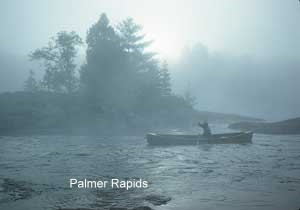 just a small creek-like trickle. Yet,
it continues to balance out all of its parts and to feed itself hour after hour,
day after day, year after year. “I’ve often thought of that and wondered myself, how it
is,” he marvelled.
just a small creek-like trickle. Yet,
it continues to balance out all of its parts and to feed itself hour after hour,
day after day, year after year. “I’ve often thought of that and wondered myself, how it
is,” he marvelled.
And stories abound about how it can
change so quickly. Almost without
notice, a summer storm can catch you out on the lake.
Or, a channel that is frozen solidly on one date is open a few days
later. Bryan recalls coming up from
the city one weekend and using his old Johnson snow machine to go down the river
on the ice to the Bay. The next
weekend he his sailing down the same trail and suddenly there’s open water
just ahead! He had to think and
change his direction quickly.
And speaking of direction, one needed to
know the direction of the flow of the river.
Grandma Helferty held the notion that you must set up your bedroom so
that your feet were pointing downriver. “That
way you sleep better,” she told me. “If you sleep up-river you’ll have all kinds of crazy
dreams.” This is the same
Grandma, who, when on the way to church one Sunday and a black cat walked across
the road in front of the car, had Hughie and the whole family turn around and go
home. She was absolutely convinced
that there was terrible bad luck just ahead.
More terrible, she believed, obviously, than the pangs of hellfire for
missing Mass on Sunday.
Those who were raised along its banks
knew it flowed towards the Atlantic, and that upstream was obviously towards the
west. Down was that way, towards
Ottawa. Not all who came from
elsewhere saw it so clearly. My
nephews brought their friend up from Toronto with his new boat and motor and
warned him he could go down the river but not upstream where there were
dangerous rocks “just about that far under the surface.”
Sure enough! It was only a
matter of time until the lad was wading around on the flat rock picking up the
parts of his lower unit.
If those city slickers didn’t
comprehend the directions of the river, you could not teach them that the road
ran along the river and, therefore, the cottage was up the road and the sheep
pasture was down. Although, the
first challenge was to help them understand that it was a river, not a lake.
On more than one occasion I recall my dad laughingly telling his
city-folk nephews, “It’s not a lake, you gammy hawk, it’s a river!”
 Over the years I’ve had the good
fortune to experience the river and several of its major lakes in various
seasons and at all hours of the day, from early misty mornings to late dark nights
when one uses the faint outline of the shoreline horizon as a guide.
It's a huge challenge to try to adequately express the fullness of those
experiences in prose or poetry. Yet,
Archibald Lampman
(1861-1899), one of Canada’s earlier principal poets wrote a beautiful poem, “Morning On the
Lievre”. Whereas the Madawaska
enters the Ottawa River about 60 miles west of the capital city, the Lievre is
also a tributary of the Ottawa and enters from the province of Quebec about 60
miles east of Ottawa, at Buckingham. Both rivers have similar, picturesque, Canadian Shield
landscapes, and Lampman’s poem could just as well be called “Morning on the
Madawaska”.
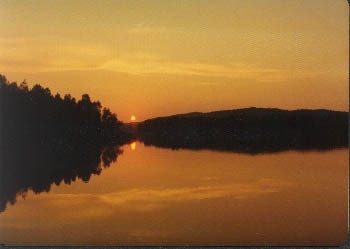
Over the years I’ve had the good
fortune to experience the river and several of its major lakes in various
seasons and at all hours of the day, from early misty mornings to late dark nights
when one uses the faint outline of the shoreline horizon as a guide.
It's a huge challenge to try to adequately express the fullness of those
experiences in prose or poetry. Yet,
Archibald Lampman
(1861-1899), one of Canada’s earlier principal poets wrote a beautiful poem, “Morning On the
Lievre”. Whereas the Madawaska
enters the Ottawa River about 60 miles west of the capital city, the Lievre is
also a tributary of the Ottawa and enters from the province of Quebec about 60
miles east of Ottawa, at Buckingham. Both rivers have similar, picturesque, Canadian Shield
landscapes, and Lampman’s poem could just as well be called “Morning on the
Madawaska”.
Morning on the Lievre
by Archibald Lampman
(1888)
| Far above us where a jay |
Where the forest and the stream, |
| Screams his matins to the day, |
In the shadow meet and plight, |
| Capped with gold and amethyst, |
Like a dream. |
| Like a vapour from the forge |
|
| Of a giant somewhere hid, |
From amid a stretch of reeds, |
| Out of hearing of the clang |
Where the lazy river sucks |
| Of his hammer, skirts of mist |
All the water as it bleeds |
| Slowly up the woody gorge |
From a little curling creek, |
| Lift and hang. |
And the muskrats peer and sneak |
| |
In around the sunken wrecks |
| Softly as a cloud we go, |
Of a tree that swept the skies |
| Sky above and sky below, |
Long ago, |
| Down the river; and the dip |
On a sudden seven ducks |
| Of the paddles scarcely breaks, |
With a splashy rustle rise, |
| With the little silvery drip |
Stretching out their seven necks, |
| Of the water as it shakes |
One before and two behind, |
| From the blades, the crystal deep |
And the others all arow, |
| Of the silence of the morn, |
As steady as the wind |
| Of the forest yet asleep; |
With a swiveling whistle go, |
| And the river reaches borne |
Through the purple shadow led, |
| Ina mirror, purple gray, |
Till we only hear their whir |
| Sheer away |
In behind a rocky spur, |
| To the misty line of light, |
Just ahead. |
In 1961, the National Film Board of
Canada, with producer David Bairstow, developed a 13-minute film to accompany Morning
on the Lievre. On several
occasions, in my early days of teaching, I used the film in Grade 7 & 8 to
help the students gain some appreciation for early Canadian literature and the
splendour of the Ottawa Valley and the Canadian Shield.
Log drives contributed to many of the
river’s stories. My dad, uncles,
and several cousins all worked the drive as young men. Like fur trapping, it was one of the few sources of income
for the young men to gain some earnings to get through the summer months.
It was common, on a spring Sunday afternoon, for the people of the nearby
villages to walk down and watch the men working the drive.
Occasionally, if the weather was suitable, they took food and joined them
for a potluck supper. Although many
songs and stories have  romanticized
the initial timber trade and log drives,
there is also a body of writing to demonstrate that the early lumber companies
valued profit and efficiency over social values and aesthetics.
The beauty of the river was devalued in those earlier days but more
recent transportation methods, environmental legislation, and social
expectations have greatly helped to restore the natural views.
romanticized
the initial timber trade and log drives,
there is also a body of writing to demonstrate that the early lumber companies
valued profit and efficiency over social values and aesthetics.
The beauty of the river was devalued in those earlier days but more
recent transportation methods, environmental legislation, and social
expectations have greatly helped to restore the natural views.
Life has been drawn to the lakes and
river corridor for centuries. Where
settlement occurred, development has been slow, plus, today, there are still long stretches of shoreline where the natural views have remained pretty much
intact. It presents a rural,
peaceful, scenery-catching experience that is not to be missed. No entry or membership fees are necessary.
Tourists, newcomers, and residents alike, continue to be astonished and
to have their imaginations stirred by its beauty.
Ó
Short Stories by Jack Madigan
Back to story
directory:
HOME